How Many Days a Week Should You Work Out? A Beginner’s Guide
Starting a fitness journey often comes with one big question: how many days a week should you work out?
Should you go to the gym every day? Is three days enough to build muscle? Will working out only twice a week help you lose weight?
The truth is that you don’t need to spend every day in the gym to make meaningful progress.
The ideal workout frequency depends on your fitness goals, experience, recovery, and daily schedule. For most beginners, three days of structured strength training per week is an excellent starting point.
Let’s break down how often you should exercise and which workout schedule makes the most sense for you.
How Many Days a Week Should You Work Out?
Here’s a quick overview based on your experience and goals:
- 2 days a week: A good starting point for complete beginners or people with very busy schedules.
- 3 days a week: An excellent option for most beginners looking to build strength, muscle and consistency.
- 4 days a week: Great for people who want more training volume and have some experience.
- 5 days a week: Suitable for experienced individuals who can manage their training and recovery.
- 6–7 days a week: Usually unnecessary for beginners. More training doesn’t automatically mean better results.
Remember, these are practical starting points rather than strict rules. Your workout routine should fit your lifestyle and allow enough time for recovery.
1. Working Out 2 Days a Week: A Great Place to Start
If you’re completely new to fitness, two days of strength training per week can help you develop a consistent routine.
It is particularly useful if you have a demanding job, family responsibilities or limited time.
Best workout style: Full-body training.
Example schedule:
- Monday: Full-body workout
- Thursday: Full-body workout
Focus on basic movements such as squats, push-ups, rows, lunges and pressing exercises.
Try to train all major muscle groups during both sessions.
Two well-planned workouts are much better than an ambitious routine you cannot maintain.
2. Working Out 3 Days a Week: The Best Starting Point for Most Beginners
If you want one recommendation, start here.
Three days of strength training provide a good balance between exercise, recovery and consistency.
You can train your entire body during each session without spending hours at the gym.
Best workout style: Full-body training.
Example schedule:
| Day | Workout |
|---|---|
| Monday | Full Body A |
| Tuesday | Rest or light walking |
| Wednesday | Full Body B |
| Thursday | Rest |
| Friday | Full Body A |
| Saturday | Walking or recreational activity |
| Sunday | Rest |
The following week, you can alternate the sessions and begin with Full Body B.
A typical workout might include:
- Squats or leg presses
- Bench presses or push-ups
- Lat pulldowns or rows
- Shoulder presses
- Romanian deadlifts
- Core exercises
Start with manageable sets and focus on proper technique.
Why it works: You train your major muscle groups regularly while leaving recovery time between sessions.
3. Working Out 4 Days a Week: Great for Building Muscle
Once you’ve developed consistency and understand the basic exercises, four training days can be a good next step.
It gives you more room to distribute exercises across different muscle groups.
Best workout style: Upper/Lower split.
Example schedule:
| Day | Workout |
|---|---|
| Monday | Upper Body |
| Tuesday | Lower Body |
| Wednesday | Rest |
| Thursday | Upper Body |
| Friday | Lower Body |
| Saturday | Rest |
| Sunday | Rest |
Upper-body workouts can include chest, back, shoulders, biceps and triceps.
Lower-body workouts can include quadriceps, hamstrings, glutes and calves.
This structure allows you to train each major muscle group twice a week while keeping recovery days between sessions.
4. Working Out 5 Days a Week: For More Experienced Lifters
Five training days can work well if you enjoy the gym and have enough time to recover.
However, it isn’t necessary for everyone.
One possible approach is a modified Push/Pull/Legs routine.
Example schedule:
| Day | Workout |
|---|---|
| Monday | Push |
| Tuesday | Pull |
| Wednesday | Legs |
| Thursday | Rest |
| Friday | Upper Body |
| Saturday | Lower Body |
| Sunday | Rest |
Push workouts focus on chest, shoulders and triceps.
Pull workouts focus on the back and biceps.
Leg workouts target the lower body.
The important thing is to manage your total training volume. Adding more gym days should not mean doing excessive sets or training through fatigue.
5. Should You Work Out 6–7 Days a Week?
For most beginners, there is little reason to start with six or seven days of structured strength training.
Your muscles need time to recover, and your body needs sufficient sleep, nutrition and rest.
Training every day can also make it harder to manage fatigue, especially when you are still learning proper exercise technique.
That doesn’t mean you should avoid physical activity on rest days.
You can still enjoy:
- Walking
- Cycling
- Swimming
- Mobility exercises
- Light recreational sports
The distinction is between staying active and performing demanding workouts every day.
Remember: recovery is part of your fitness routine, not a break from it.
How Many Days Should You Work Out for Different Goals?
Your fitness goal can influence how you structure your weekly routine.
If Your Goal Is to Build Muscle
Start with three full-body strength sessions per week.
As you gain experience, you can move to four days using an upper/lower split.
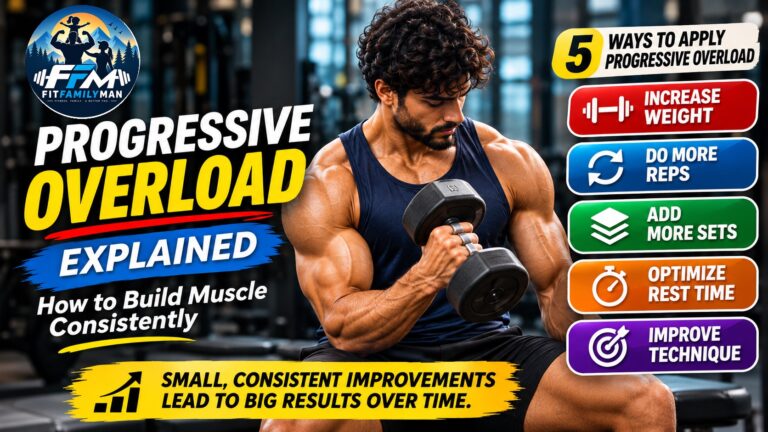
Focus on progressive overload, appropriate training volume, sufficient protein and recovery.
If Your Goal Is to Lose Fat
Start with two or three strength-training sessions per week.
Combine them with regular walking or other cardiovascular activities.
Fat loss primarily depends on maintaining a sustainable calorie deficit. Going to the gym more frequently does not automatically guarantee faster weight loss.
If Your Goal Is to Improve General Fitness
Aim for a combination of strength training and cardiovascular activity.
A useful long-term target for most adults is at least 150 minutes of moderate-intensity aerobic activity per week, along with muscle-strengthening activities on at least two days.
You can gradually build towards this target according to your current fitness level.
How Much Rest Do You Need Between Workouts?
Rest is essential for making progress.
When you perform strength exercises, your muscles experience stress. Recovery allows your body to adapt to that training.
Here are a few practical guidelines:
- Allow recovery time before training the same muscle groups intensely again.
- Avoid repeatedly training through significant muscle soreness or pain.
- Aim for 7–9 hours of sleep when possible.
- Eat enough protein and maintain a balanced diet.
- Adjust your training if performance and energy levels consistently decline.
You don’t need to feel completely exhausted after every workout for it to be effective.
5 Signs You’re Training Too Frequently
More workouts aren’t always better. Pay attention to how your body responds.
You may need to adjust your routine if you experience:
- Persistent fatigue: You feel exhausted even after taking rest days.
- Declining performance: Your usual weights or repetitions become increasingly difficult.
- Poor sleep: Your recovery and sleep quality begin to suffer.
- Persistent soreness: Muscle soreness continues to interfere with normal activities and training.
- Loss of motivation: You increasingly dread workouts and struggle to stay consistent.
These signs can have several causes, including insufficient sleep, nutrition, stress or excessive training. Reduce your workload and seek professional advice if symptoms persist or you experience unusual pain.
How to Stay Consistent With Your Workout Schedule
The biggest challenge for many people isn’t choosing the perfect workout split. It’s following a routine consistently.
Here are five ways to make that easier:
1. Schedule workouts in advance
Treat your workout sessions like important appointments. Choose days and times that realistically fit your routine.
2. Start with fewer days
Don’t jump from no exercise to six gym sessions a week. Build your routine gradually.
3. Keep workouts manageable
A focused 45-minute workout can be more useful than spending two hours at the gym without a plan.
4. Track your progress
Record your exercises, weights and repetitions. Small improvements can help you stay motivated.
5. Don’t chase perfection
Missing one workout doesn’t mean your fitness journey has failed. Return to your schedule at the next opportunity.
Frequently Asked Questions
Is working out 3 days a week enough?
Yes. Three well-planned strength-training sessions can help beginners build strength and muscle, particularly when combined with proper nutrition and recovery.
Can I build muscle working out 2 days a week?
Yes. Two full-body strength sessions per week can help you build muscle, especially if you are a beginner. Progress may be different compared with a higher-volume routine.
Is it better to work out in the morning or evening?
Neither is universally better. The best time is the one that allows you to exercise consistently and perform comfortably.
Should I work out every day to lose belly fat?
No. Daily workouts are not necessary for losing belly fat. Focus on a sustainable calorie deficit, strength training, regular physical activity and adequate sleep. You cannot selectively burn fat from one body area through specific exercises.
How long should a beginner work out?
A beginner can start with approximately 30–45 minutes per strength-training session. The ideal duration depends on the exercises, rest periods and individual fitness level.
Final Verdict: Consistency Beats Frequency
So, how many days a week should you work out?
For most beginners, three days of strength training per week is a practical and effective starting point.
If you have very limited time, two days can still make a difference. If you have more experience and enjoy structured training, four or five days may suit you better.
The real secret isn’t training as often as possible.
It’s choosing a routine you can follow consistently, allowing your body to recover and gradually improving over time.
Three workouts every week for an entire year will take you much further than six workouts a week for three weeks followed by burnout.
Start small. Stay consistent. Build strength for life.
FITFAMILYMAN — FITNESS. FAMILY. A BETTER YOU.