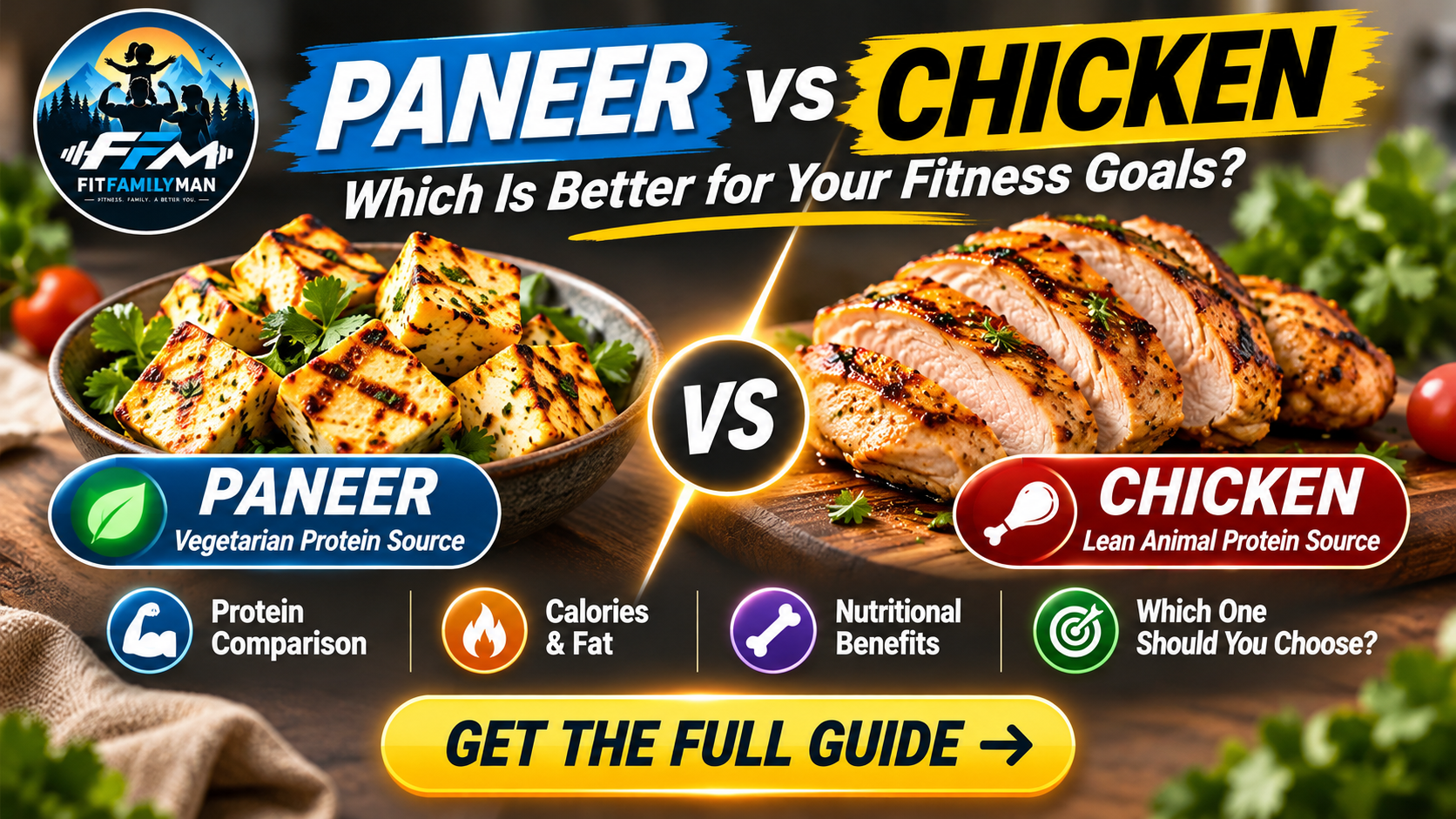
Paneer vs Chicken: Which Is Better for Your Fitness Goals?
If you’re trying to build muscle, lose fat or simply eat healthier, protein should be an important part of your diet.
Two popular protein sources in Indian households are paneer and chicken. Paneer is a favourite among vegetarians, while chicken is widely preferred by people looking for a lean, protein-rich food.
But which one is actually better?
Does chicken provide more protein? Is paneer too high in calories? Can vegetarians build muscle just as effectively with paneer?
Let’s compare both foods and understand which one fits your fitness goals.
1. Paneer vs Chicken: Nutritional Comparison
Let’s start with the numbers.
Here is an approximate nutritional comparison per 100 grams of each food, using Indian Food Composition Tables (IFCT 2017) values.
| Nutritional value | Paneer | Skinless Chicken Breast |
|---|---|---|
| Calories | 305 kcal | 168 kcal |
| Protein | 18.9 g | 21.8 g |
| Fat | 24.8 g | 9 g |
| Carbohydrates | 2.4 g | 0 g |
Values are approximate averages. Actual nutrition varies depending on the paneer, chicken cut and preparation method.
Chicken breast provides slightly more protein per 100 grams, with considerably fewer calories and less fat.
Paneer, on the other hand, offers protein along with calcium and other nutrients found in dairy products.
The takeaway: If you’re prioritising protein while keeping calories low, chicken breast has an advantage. If you prefer vegetarian food or need a more calorie-dense protein source, paneer can be a useful option.
2. Which Is Better for Building Muscle?
The good news is that both paneer and chicken can support muscle growth.
Your muscles need sufficient protein, consistent resistance training and adequate recovery to grow. You don’t have to eat chicken to build an impressive physique.
Why chicken works well for muscle building
- Provides high-quality complete protein.
- Offers slightly more protein per 100 grams than paneer in the comparison above.
- Contains less fat and fewer calories.
- Makes it easier to increase protein intake without adding too many calories.
Why paneer works well for muscle building
- Provides complete dairy protein.
- Offers a convenient vegetarian protein option.
- Contains calcium, which supports normal bone health.
- Can contribute both protein and calories when you’re trying to gain weight.
Both can be part of an effective muscle-building diet. Your total daily protein intake matters much more than choosing one food over the other.
3. Which Is Better for Weight Loss?
If fat loss is your primary goal, chicken breast generally has the advantage.
Why?
Because it offers more protein for fewer calories.
Protein helps you maintain muscle while losing weight and can also help you feel satisfied after meals.
Consider this comparison:
- 100 g chicken breast: approximately 21.8 g protein and 168 calories.
- 100 g paneer: approximately 18.9 g protein and 305 calories.
You get a similar amount of protein from both, but paneer comes with significantly more calories.
That doesn’t mean you should eliminate paneer when losing fat.
Instead, consider:
- Choosing lower-fat paneer when available.
- Keeping portions appropriate for your calorie target.
- Cooking with less oil and cream.
- Pairing paneer with vegetables and other nutrient-rich foods.
If you eat chicken, grilled, roasted or lightly cooked chicken breast can be a practical high-protein option.
Remember: Weight loss ultimately depends on maintaining a calorie deficit. Neither paneer nor chicken automatically causes fat loss.
4. Paneer vs Chicken: Other Nutritional Benefits
Protein isn’t the only thing that matters when choosing food.
Benefits of paneer
Paneer offers:
- Calcium for bone health.
- Phosphorus, which contributes to normal bone and energy metabolism.
- Vitamin B12, although amounts vary.
- A vegetarian source of complete protein.
Paneer can be particularly useful for people who don’t eat meat and want to increase their protein intake.
Benefits of chicken
Chicken offers:
- Complete, high-quality protein.
- Vitamin B6, which supports normal energy metabolism.
- Vitamin B12.
- Selenium and phosphorus.
Chicken is especially useful when you want to increase protein intake without adding too many calories.
5. How Much Paneer or Chicken Should You Eat?
There is no single ideal portion for everyone. Your body weight, activity level, calorie requirements and overall diet all matter.
Here are some practical examples:
| Food | Approximate protein |
|---|---|
| 100 g paneer | 18.9 g |
| 150 g paneer | 28.4 g |
| 100 g skinless chicken breast | 21.8 g |
| 150 g skinless chicken breast | 32.7 g |
These figures use the same approximate food-composition values as the comparison above.
One important point: these are reference values for the food before cooking. Cooking changes its water content, so 100 g of cooked chicken can contain more protein than 100 g of raw chicken.
Always compare like with like when tracking your food.
6. Healthy Ways to Include Paneer and Chicken in Your Diet
The best protein source is one you enjoy and can include consistently.
Healthy paneer meal ideas
- Paneer bhurji with whole-wheat roti.
- Grilled paneer with vegetables.
- Paneer tikka with mint chutney.
- Paneer salad with cucumber, tomato and greens.
- Paneer stir-fry with minimal oil.
Healthy chicken meal ideas
- Grilled chicken breast with vegetables.
- Homemade chicken curry with controlled oil.
- Chicken stir-fry with vegetables.
- Chicken salad with a yoghurt-based dressing.
- Homemade chicken wraps with whole-wheat roti.
Try to avoid relying on deep-fried preparations, heavy cream-based gravies and excessive cooking oil if you’re managing your calorie intake.
7. Can You Include Both Paneer and Chicken in Your Diet?
Absolutely.
You don’t have to choose one permanently.
If you eat both vegetarian and non-vegetarian food, alternating between paneer and chicken can make your meals more interesting and help you meet your daily protein requirements.
For example:
- Lunch: Grilled chicken with rice and vegetables.
- Dinner: Paneer bhurji with roti and salad.
If you’re vegetarian, you can combine paneer with other protein sources such as lentils, soy chunks, tofu, milk and curd.
Variety makes a balanced diet easier to follow over the long term.
8. So, Which One Should You Choose?
Let’s make the decision simple.
| Your fitness goal | Better choice |
|---|---|
| Maximum protein with fewer calories | Chicken breast |
| Vegetarian muscle-building diet | Paneer |
| Fat-loss diet | Chicken breast generally has an advantage |
| Higher-calorie muscle-gain diet | Either can work |
| Calcium intake | Paneer |
| Meat-free protein source | Paneer |
There is no universal winner.
Chicken is generally more calorie-efficient as a protein source. Paneer offers a valuable vegetarian alternative with its own nutritional benefits.
The right choice depends on your dietary preferences, fitness goals and total daily nutrition.
Final Thoughts: Consistency Matters More Than Your Protein Source
Building muscle and losing fat aren’t about eating one magical food.
They’re about combining the right nutrition with regular exercise, adequate sleep and consistency.
If you enjoy chicken, include it in your meals. If you prefer paneer, there’s no reason to avoid it. And if you eat both, you have even more flexibility.
Focus on meeting your daily protein requirements, managing your overall calories and following a training routine you can sustain.
Eat well. Train consistently. Build a stronger you.
Frequently Asked Questions
1. Does chicken have more protein than paneer?
According to IFCT 2017 reference values, 100 g of skinless chicken breast contains approximately 21.8 g of protein, while 100 g of paneer contains approximately 18.9 g.
2. Is paneer good for muscle building?
Yes. Paneer provides complete dairy protein and can support muscle growth when combined with adequate daily protein intake and resistance training.
3. Is chicken better than paneer for weight loss?
Chicken breast generally provides more protein for fewer calories, making it a more calorie-efficient choice. However, paneer can also fit into a weight-loss diet when portions and total calories are managed.
4. Can vegetarians build muscle without chicken?
Absolutely. Paneer, tofu, soy chunks, lentils, dairy products and other vegetarian protein sources can help you meet your protein requirements.
5. Can I eat paneer every day?
Paneer can be part of a balanced diet. However, consider portion sizes, fat content and variety in your overall protein sources.
6. Is grilled paneer healthier than fried paneer?
Grilled paneer generally requires less added oil than deep-fried paneer. The ingredients and cooking method can make a significant difference to the final calorie content.
